

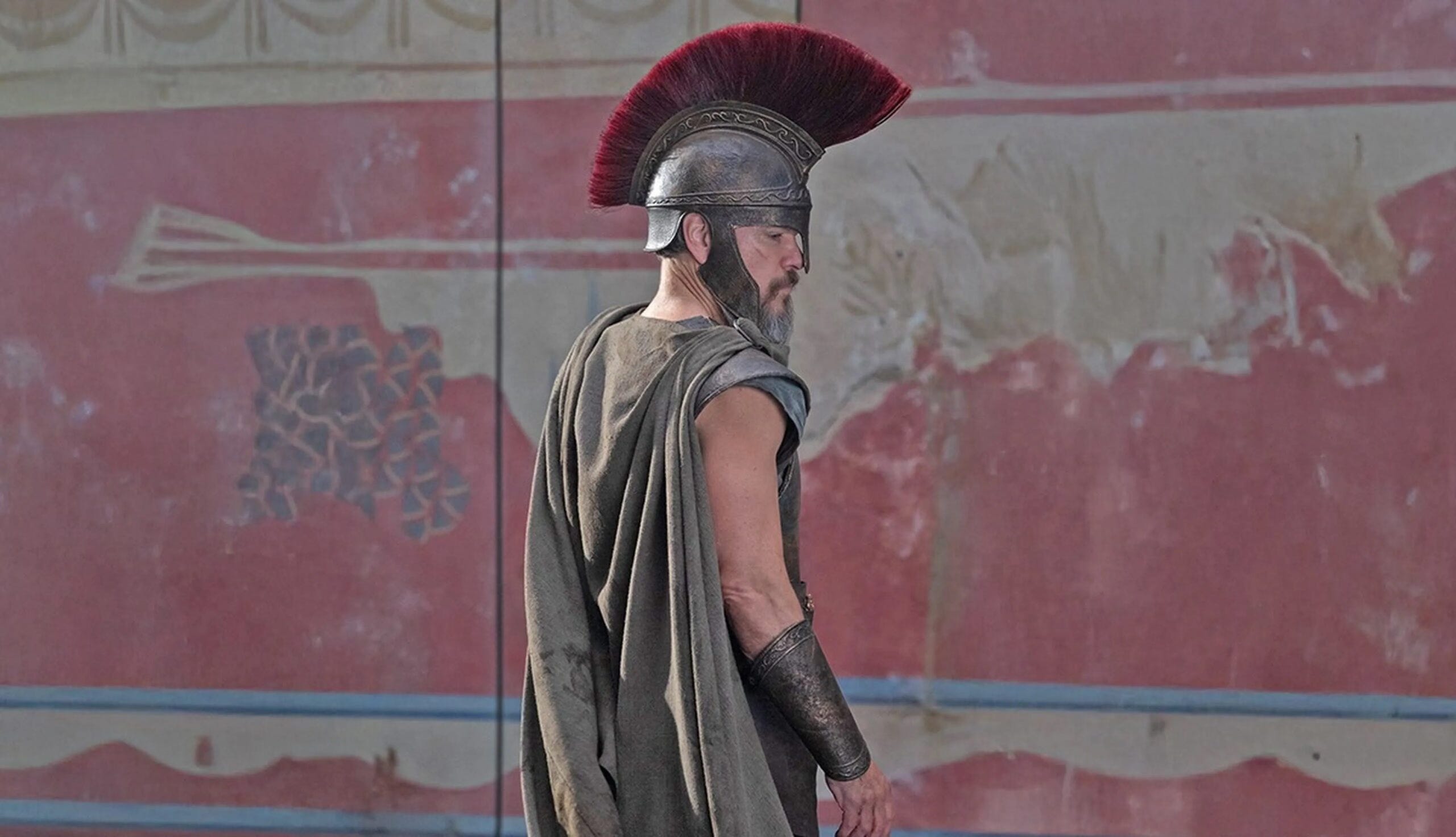
Christopher Nolan is one of my favourite directors. Yet not one of his films makes it into my personal top ten. Rather strange, really.
I think it’s because the characters in his films almost never really touch you on an emotional level; there’s always a slight distance. With the films that do make my top ten (Se7en, Eternal Sunshine of the Spotless Mind, JoJo Rabbit) I’ve felt intensely for the main characters. Sometimes so intensely that I can’t watch the film a second time; too much grief, too exhausting.
Nolan’s films, on the other hand, I always want to watch a second, third, even fourth time. Because there’s always more to see. So much to see. A good film is more than just emotion. More than just plot. The film itself is a construction, a concept with multiple layers.
— as is true of all good books and good design.
I remember, as a teenager, seeing the structure of a novel for the first time: not only was chess a motif that kept recurring throughout; on a second reading I suddenly saw that the entire book had been constructed as a game of chess. Perhaps this book ('Carrion Comfort' by Dan Simmons) isn't the best example in the world, but it was the first time I'd spotted something like that myself, and I thought it was wonderful.
In the structure of his films, Nolan likes to play with time and relativity, and all his films share one overarching theme: guilt and atonement. Or better put: choices and consequences.
If you’re going to manipulate people’s subconscious, do you still know, in the end, what’s real and what isn’t? Doesn’t it drive you out of your own mind? (Inception)
If you have to choose between leaving your children behind for a chance to save the world, or staying with your children while the world is guaranteed to perish, what would you do? Which guilt is worse? (Interstellar)
Do you build a weapon so a terrible war can come to an end, even though it also gives the world the means to destroy itself from then on, or do you refuse and let the war drag on? How do you want to go down in history? (Oppenheimer)
Memento hit hardest on this front, perhaps, because Leonard can’t grasp the consequences of his own actions: his short-term memory is broken. He wants revenge on his wife’s murderer, but the moment he gets it, he’s forgotten it again by the next day. How many murders has he already committed this way — and how many more will he commit?
Choices and consequences.
The theme has fascinated me since childhood.
I was seven or eight when I came home from school and I told my mother, beaming, what the teacher had said: that grandpa had been a HERO! He’d been in the resistance and in a concentration camp, and the teacher had said people like that were heroes! Wasn’t that wonderful?
My mother — one metre eighty-three, skin and bone, jet-black hair, jet-black eyes, skin as white as paper — turned to face me and... EXPLODED.
I’ll never forget it. Can’t.
That grandpa was a coward, a terrible father, that he’d abandoned his wife and children for his own stubborn righteousness, that she’d never had a father and had to shoulder everything herself, that he’d knowingly and willingly taken the risk that his wife and children would be left to fend for themselves in a starving, bombed-out Rotterdam.
I think the neighbours on the other side of the square must have heard her too. I, at any rate, kept quiet and slunk off. This needed thinking about, because — volume notwithstanding — what she’d said hadn’t sounded unreasonable.
I came to the conclusion that both the teacher and my mother were right. That this was possible: several opinions could be true at once, depending on perspective. That was a big discovery for a small child, and I’ve thought about it often since.
It was only later that I began to wonder: had grandpa foreseen those consequences at all? — the family left to manage without him, the concentration camps, the PTSD, the mental hospitals, the strained relationship with his daughter? And if so: would he still have made the choice to join the resistance? Had it been worth it?
And if he hadn’t made that choice, but had stayed with his family instead, taken no risks, kept his head down, gone along with the occupier — could he have lived with those consequences? Or would he have thought himself a coward then?
Would my mother have considered him a hero, in that case? Or still a coward, but now for the opposite reasons?
Choices and consequences. You have to do what you can live with.
Anyway, with all that at the back of my mind, I went to see The Odyssey. I loved it. And now I find myself baffled by the opinion of some of the people who also went to see it: ‘shallow spectacle’. Did they watch the same film?
Of course there’s spectacle: it’s an adaptation of an Ancient Greek epic. You know the drill: cyclopes, sea monsters, sirens. But what I mostly saw was the story of a war criminal who doesn’t dare to go home.
Sorry, what?
Yes — and it wasn’t even subtle.
See, you need an angle to tell a story. With Oppenheimer, for instance, that angle was the political climate after the war; the aftermath. The story was told looking back from the McCarthy-era, at a hearing before the American Congress. That gives the story its direction, and the opportunity to circle around in time until you’ve got your viewer exactly where you want them.
The Odyssey isn’t really a story you’d want or be able to retell from A to Z in three hours, so Nolan picks his angle: a soldier returning home after ten years of war. That’s indeed the backbone of Homer’s tale, nothing invented there. What’s more, the non-historical story gives him the chance to supercharge it with a shot of social critique.
You can’t really twist the truth of a fairy tale, can you?
In that sense, Dunkirk is the ultimate counterpart to The Odyssey: an immersion in an accurately rendered slice of history, with barely a plot or a line of dialogue to speak of. The history is the plot.
Nolan shows Odysseus as the destroyer of a civilisation, even of a world order, as he drifts further and further off course, looting and plundering. You don’t notice this at first, because you think you know the story, because Odysseus is the hero. Because Matt Damon has been cast as Odysseus — an actor with, according to a newspaper’s review, the charisma of a Golden Retriever — so he must be the good guy.
I went looking for reviews that had seen what I’d seen, and thankfully found them — in abundance, even. Screenwriter and journalist Cole Haddon wrote an insightful piece dissecting the film’s structure, and in passing highlighting a few socially critical easter eggs, such as the fact that if Helen is Black, so is her twin sister Clytemnestra, and so, therefore, is Clytemnestra and Agamemnon's daughter — a Black girl, casually sacrificed by Agamemnon to the gods in exchange for a favourable war.
Ouch.
Haddon explains that a ‘normal’ script reveals its setup roughly nine minutes into the film: an event that goes on to shape the rest of the story. In The Odyssey, this setup is shown precisely nine minutes before the end: the total destruction of Troy. Only then do all the pieces fall into place, and your perspective flips a hundred and eighty degrees.
Odysseus is a war criminal with post-traumatic stress disorder. He doesn’t dare go home; he’s not the same man who left ten years ago. How will his wife see him? He has twisted and betrayed the Law of Zeus, destroyed the very foundation of his civilisation.
Athena is a figment of his imagination, representing his conscience; she turns out to wear the face of a slaughtered Trojan girl. Calypso is his therapist, offering him first oblivion, then a shoulder to cry on. Circe embodies every woman who has ever become a victim of war, and turns Odysseus’s men into pigs, ‘because that’s what they really are’. Penelope, the ‘invisible’ wife, at one point reminds her son that that ‘empty throne’ has actually been occupied by her for twenty years.
‘Invisible women’s roles’, I read in review after review.
Come again?
Calypso and Athena do deviate considerably from the characters in the source material, yes, but invisible? Did those reviewers need the loo or something? Three hours is quite a long time...
Odysseus had a choice: after ten years, force a decision in an endless war with an inventive but morally dubious plan (the Trojan Horse — the gift the Trojans, by their own moral standards, couldn’t refuse) and finally go home, or carry on muddling through. Could he have foreseen the consequences — the guilt, the trauma, the undermining of his civilisation? Would he have chosen differently, if he had?
In the Greek epic, that question doesn’t come through quite so sharply, though it’s there for the reader who goes looking. But Nolan has an axe to grind: with war-lust and trauma, with racism and misogyny.
My grandfather got LSD therapy; Odysseus ate lotus flowers. Would they have made a different choice, if they’d been able to foresee the consequences?
— Anyway, go and see it as a Nolan film. It's brilliant; Agamemnon looks like Batman and that's just too cool. Don't go if you want to see an Ancient Greek fairy tale though; that'd be a right waste of your eighteen quid.